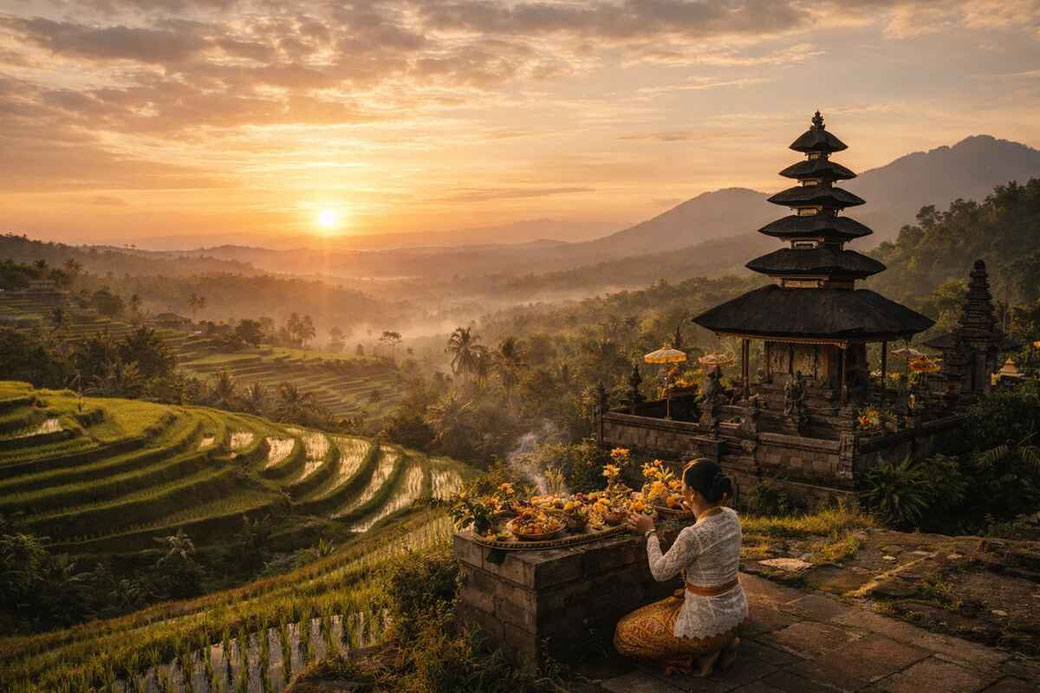
The History of Bali
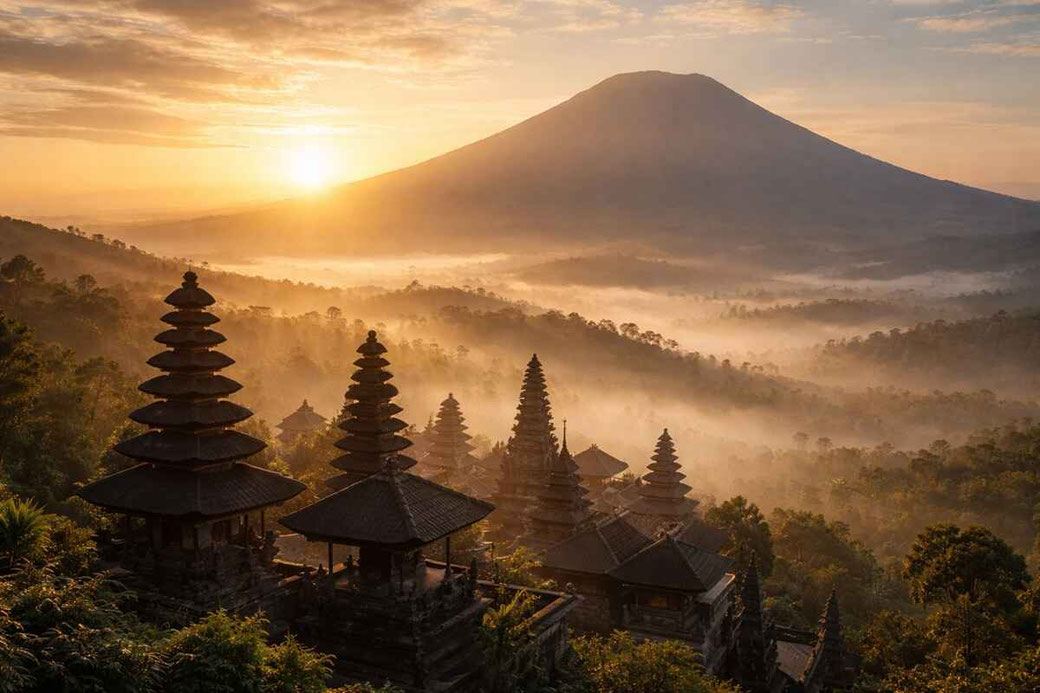
Bali’s history is as rich and diverse as its landscapes. From its volcanic birth to its thriving modern culture, the island has absorbed influences from India, Java, China, Europe, and beyond — yet has always preserved its own unique identity.
Ancient kingdoms, colonial powers, and the rise of tourism have each shaped Bali in their own way.
This overview invites you to explore the key chapters of Bali’s past — from the island’s geological origins and spiritual roots to its struggle for independence and the rise of global tourism. Discover how each period has contributed to the vibrant Bali we know today.
The History of Bali – From Origins to Modern Times
Bali’s history stretches from its volcanic birth millions of years ago to its vibrant, modern-day culture shaped by religion, trade, and tourism. Each era has left its mark on the island’s unique identity — a blend of tradition and change.

1. The Birth of Bali
Long before Bali became known for its temples, beaches, and rice terraces, the island began as a fragment of Earth shaped by immense geological forces. Formed through the clash of tectonic plates and countless volcanic eruptions, Bali’s mountains, fertile valleys, and coral coastlines tell a story millions of years old. This chapter explores how fire, water, and shifting landscapes created the island’s unique environment, its rich biodiversity, and the spiritual traditions that still connect the Balinese people to their volcanic homeland.
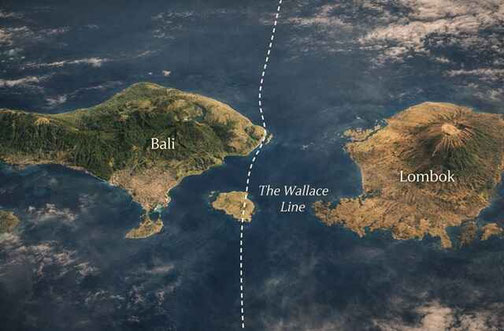
2. The Wallace Line
Though Bali and Lombok lie only a short distance apart, the narrow sea between them marks one of the world’s most remarkable natural boundaries: the Wallace Line. This invisible divide separates Asian and Australasian wildlife, creating a sudden shift in species over just 35 kilometres. This chapter introduces how Alfred Russel Wallace discovered this boundary, why a deep ocean trench prevents animals from crossing, and how the line still shapes biodiversity, conservation, and scientific understanding today.
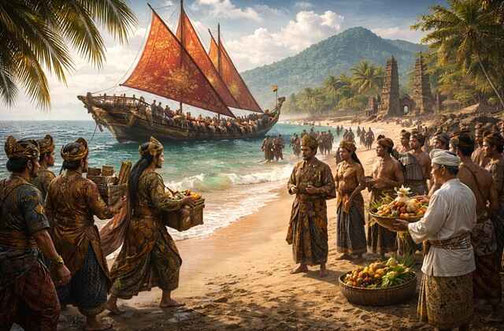
3. The Majapahit Era
When the Majapahit Empire rose in East Java in the late 13th century, its influence soon reached Bali. Rather than replacing local customs, Majapahit blended with them, shaping the island’s culture, religion, and social structure.
This chapter introduces how Javanese priests and nobles brought Hindu-Buddhist traditions to Bali, how the fall of Majapahit sent a wave of artists and scholars to the island, and why Bali became the final guardian of this once-great empire.
4. The Rise of Hinduism in Bali
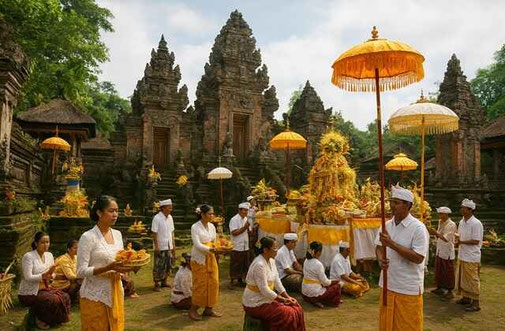
Bali is known as the “Island of the Gods,” where Hindu temples and daily offerings are part of life. But how did Hinduism take root here, while most of Indonesia embraced Islam?
This chapter reveals how ancient animistic beliefs blended with Indian influences, later strengthened by the Majapahit migration. It explains why Bali’s structured society, rituals, and spiritual traditions helped Hinduism survive, turning the island into the last stronghold of Hindu culture in Southeast Asia.
5. Bali and the Dutch VOC
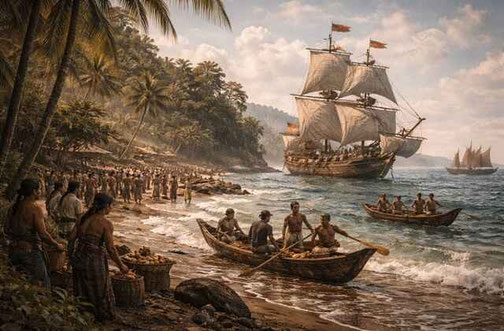
When the Dutch East India Company arrived in the region, Bali held little interest in terms of spices, yet it became an intriguing meeting point between two very different worlds. This chapter introduces the early encounters between Dutch traders and Balinese kingdoms, marked by cautious exchanges, shifting alliances, and fragmented local politics. It explores how the VOC influenced Bali indirectly — through trade, diplomacy, and rivalry — long before direct colonial rule began in the 19th century.
6. The Dutch Conquest & the Puputan Wars
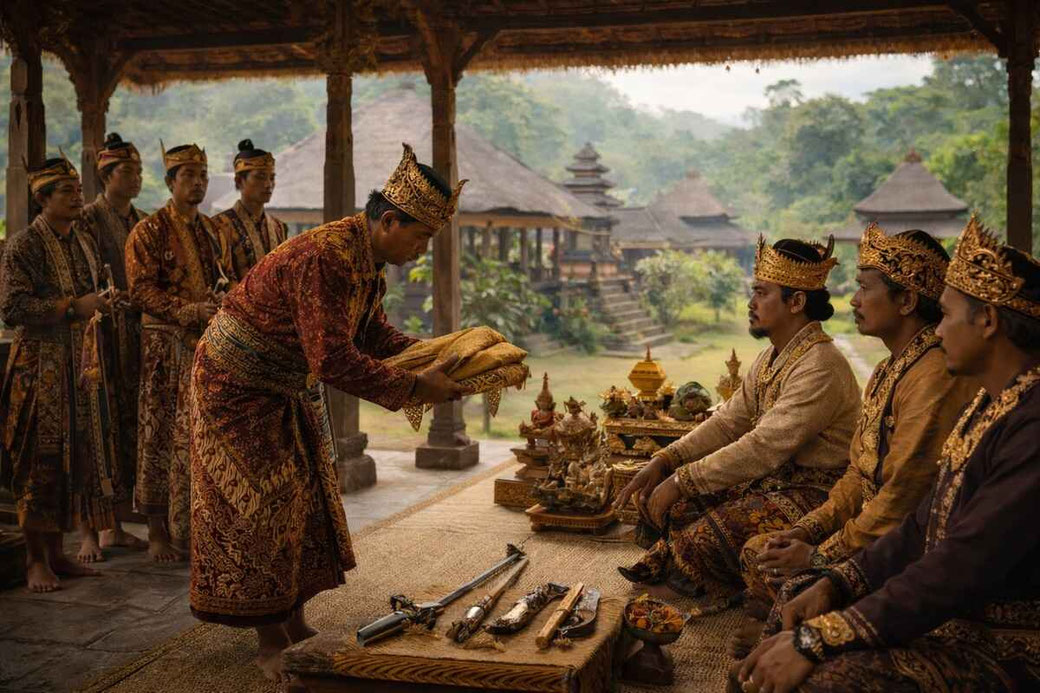
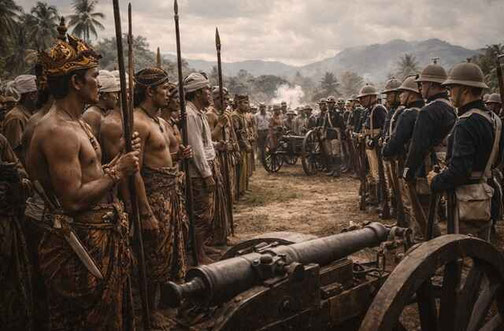
In the 19th century, the Dutch shifted from trade to territorial control across Indonesia, yet Bali remained proudly independent under its local kingdoms. Tension rose when the Dutch launched their first expedition to North Bali in 1846, using disputes over shipwrecks as justification. Battles followed in Buleleng and Karangasem, leading to the dramatic 1849 clash in Klungkung — the first major Puputan, where Balinese chose honour over surrender. Later Puputan in Badung (1906) and Klungkung (1908) shocked the West.

7. Bali under Dutch Colonial Rule
After the final Puputan in 1908, the Dutch took full control of Bali but chose to govern through cultural preservation rather than suppression. Under the Ethical Policy, Bali was presented as a protected Hindu society, with rajas and village councils kept in place under Dutch oversight. This approach attracted European scholars and artists, whose fascination helped shape the idea of Bali as a spiritual paradise. In the 1920s–30s tourism grew, reinforcing this myth while colonial inequality persisted.
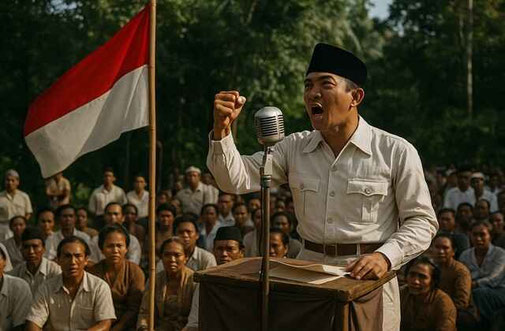
8. Bali Independence Struggle
In 1942, Bali’s quiet rhythm broke when Japanese forces invaded and the Dutch surrendered almost instantly. The new rulers promised Asian brotherhood but soon imposed forced labor, shortages, and strict censorship. Many Balinese were sent as romusha, suffering harsh conditions while daily life collapsed. Yet the occupation also sparked political awareness, allowing limited nationalist activity that inspired figures like I Gusti Ngurah Rai. After Japan’s defeat in 1945, the Dutch tried to return, leading to fierce resistance.

9. The Rise of Mass Tourism (1960s–1970s)
In the 1960s, Bali emerged from isolation and entered a period of rapid change. Its untouched landscapes and deeply rooted spiritual life attracted early travelers seeking authenticity. Though infrastructure was minimal, this simplicity drew visitors who stayed in small homestays and mingled with local families. By the 1970s, surfers and backpackers transformed places like Kuta into vibrant hubs, and the island became part of the Asian travel circuit. With the opening of Ngurah Rai Airport in 1978, mass tourism began.

10. The Modern Era
By the 1980s, Bali had become a world-famous destination, entering an era of rapid growth and new challenges. Luxury resorts, direct flights, and global media turned the island into a powerful brand, making tourism its main economic force. But expansion strained water, land, and traditional communities. The 2000s brought further shocks with the Bali bombings, followed by a strong recovery shaped by digital globalization. New visitors arrived — from digital nomads to wellness seekers — transforming Ubud and Canggu.