
The Wallace Line
Nature’s Great Divide
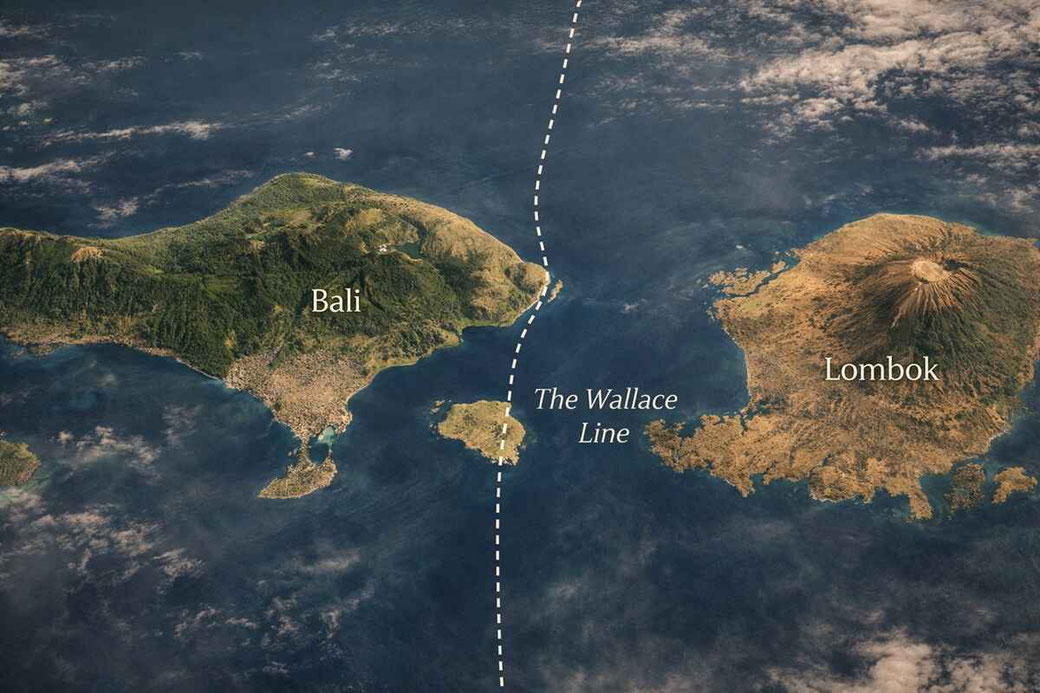
At first glance, the islands of Bali and Lombok appear close — separated by just a narrow stretch of sea. Yet this short distance marks one of the most important biological boundaries on Earth: the Wallace Line. It is an invisible divider that splits the natural world of Southeast Asia into two distinct realms, where tigers and monkeys live on one side, and marsupials and cockatoos on the other.
The Discovery of a Hidden Border
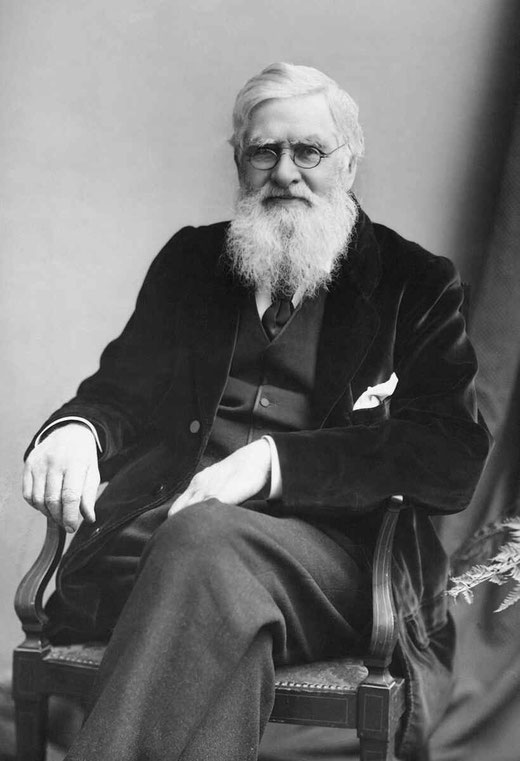
In the mid-19th century, British naturalist Alfred Russel Wallace travelled through the Malay Archipelago to study its wildlife. Between 1854 and 1862, he visited more than 150 islands, including Bali and Lombok. To his astonishment, he found that the species on Bali resembled those of Asia, while those on Lombok looked more like those from Australia. The short 35-kilometre strait between them formed a sudden, dramatic shift in nature.
Wallace realized he had found a biogeographical boundary, later named the Wallace Line. It became one of the great scientific discoveries of the 19th century and helped confirm the emerging theory of evolution by natural selection.
A Deep Ocean Trench – The Real Barrier
What makes this boundary so sharp is not distance, but depth. The Lombok Strait, which separates Bali from Lombok, is more than 1 300 metres deep. During the Ice Ages, when sea levels dropped by over 100 metres, shallow seas elsewhere connected islands like Java and Sumatra to the Asian mainland — allowing animals to migrate. But the Lombok Strait remained deep, forming a permanent water barrier that even the lowest sea levels could not bridge.
Thus, elephants, tigers, and rhinoceroses reached Bali but could not cross to Lombok. Conversely, cockatoos, wallabies, and marsupials thrived to the east but never reached Bali.
The Asian and Australasian Worlds
To the west of the Wallace Line lies the Sunda Shelf, part of the Asian continental platform. To the east lies the Sahul Shelf, connected to Australia and New Guinea.
Bali’s ecosystem belongs to the Sunda region: macaques, civet cats, deer, and countless Asian bird species dominate. Just across the line in Lombok, the fauna shifts dramatically — megapodes, marsupial cuscus, and colorful parrots appear. This stark difference over such a short distance fascinated scientists and continues to inspire research today.
A Meeting Point of Two Biomes
Modern biologists no longer see the Wallace Line as an absolute border but as a transition zone — part of a broader region called Wallacea, stretching from Lombok to Sulawesi and the Maluku Islands. Here, Asian and Australasian species overlap and evolve together, creating a rich mix found nowhere else on Earth. Bali sits right on the western edge of this biological frontier.
Human Understanding and Cultural Parallels
For centuries, local people noticed differences in flora and fauna but did not see them as boundaries. Only science gave the concept a name. Yet interestingly, Balinese cosmology also divides the world between opposites: mountain and sea, order and chaos, male and female. The Wallace Line mirrors this duality in nature itself — Bali stands at the balance between two worlds.
Environmental Importance Today
This biogeographical divide remains vital for conservation. Knowing where species originate helps protect them and their habitats. Bali’s wildlife, for example, is closely tied to Asian forests, while Lombok’s ecosystem needs distinct protection strategies. Understanding the Wallace Line helps Indonesia design regional conservation programs for endangered species and ecosystems.
The Ongoing Journey of the Islands
Geologically, the Wallace Line continues to evolve. The tectonic plates beneath the region still move; islands shift, volcanoes rise, and habitats change. Yet the line remains a reminder that even a small stretch of water can separate entire worlds.

Although this information has been compiled with care, it may still be incomplete. If you have additions or comments, please feel free to share them in the comments below so other readers can benefit as well.