
The Majapahit Era
Java’s Legacy in Bali

When the powerful Majapahit Empire rose in East Java in the late 13th century, its influence extended far beyond the borders of Java itself. At its height, Majapahit controlled much of the Indonesian archipelago, including Bali. Yet, rather than suppressing local traditions, Majapahit helped shape Bali into the cultural heartland it is today.
The story begins around 1293 AD, when Majapahit was founded by King Raden Wijaya. Under the leadership of Hayam Wuruk and his brilliant prime minister Gajah Mada, the empire reached its golden age in the 14th century. Through a mix of diplomacy, trade, and military might, Majapahit became a maritime powerhouse, uniting many islands under a shared culture rooted in Hindu-Buddhist beliefs.
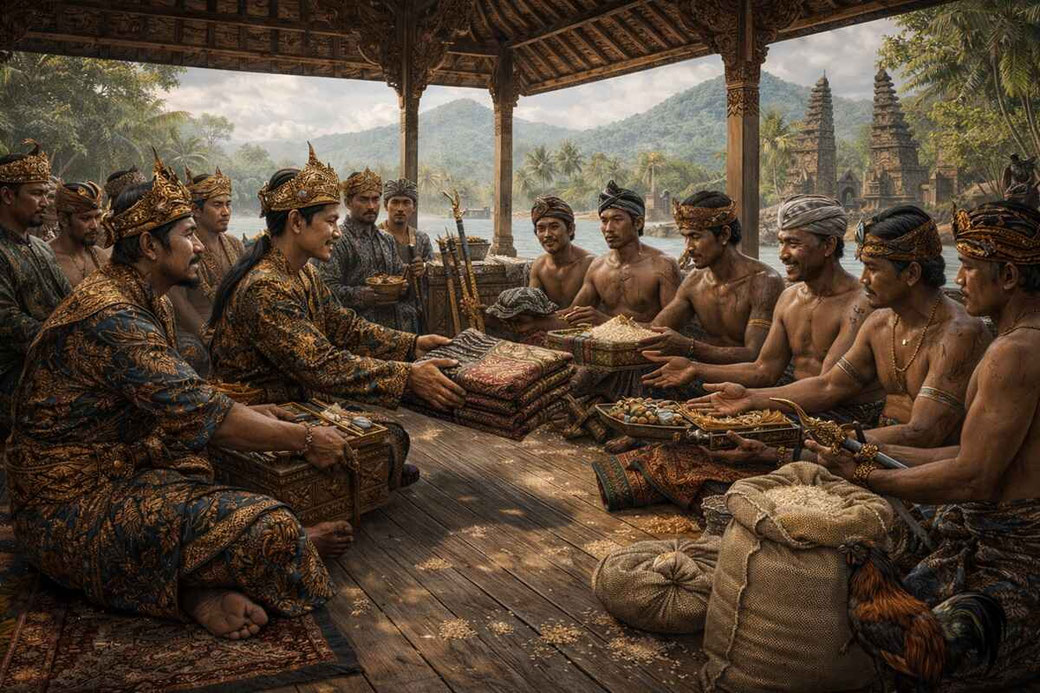
When Majapahit influence reached Bali, it encountered an island already rich in animist traditions and local kingdoms. Rather than destroying this heritage, Javanese priests, artists, and nobles introduced refined Hindu philosophies, architecture, and governance systems. The Balinese caste system—based on Brahmins, warriors, merchants, and peasants—mirrored Majapahit’s social structure.
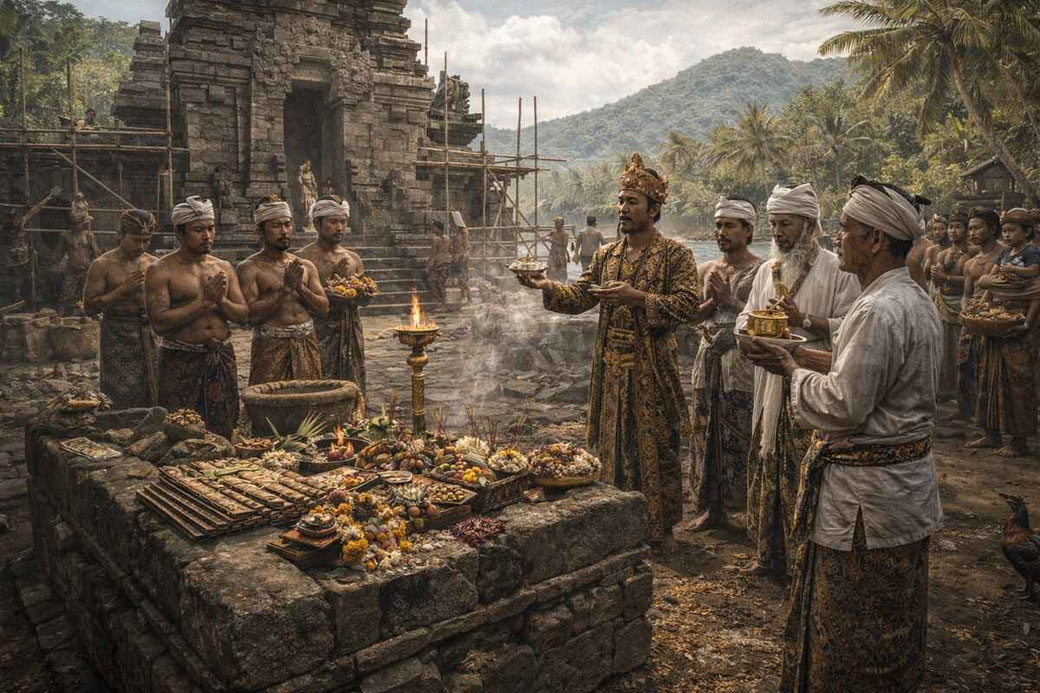
The fall of Majapahit in the late 15th century marked a turning point. As Islam spread rapidly across Java, many Hindu nobles, artists, and scholars fled to Bali, bringing with them manuscripts, art, and sacred rituals. This migration sparked a cultural renaissance, turning Bali into the last stronghold of the Majapahit legacy. The royal courts of Gelgel and Klungkung in Bali became the new centers of power, preserving Javanese traditions for centuries to come.
To this day, traces of Majapahit influence can be seen everywhere in Bali: in the temple architecture, the Balinese language (which retains many Old Javanese words), and the rituals that blend Hinduism with local beliefs. Even the Balinese calendar and writing system stem from Majapahit-era innovations.
In short, while Majapahit vanished from Java, it found eternal life in Bali—where its cultural flame still burns brightly.

Although this information has been compiled with care, it may still be incomplete. If you have additions or comments, please feel free to share them in the comments below so other readers can benefit as well.