
The Dutch Conquest and the Puputan Wars (1846–1908)
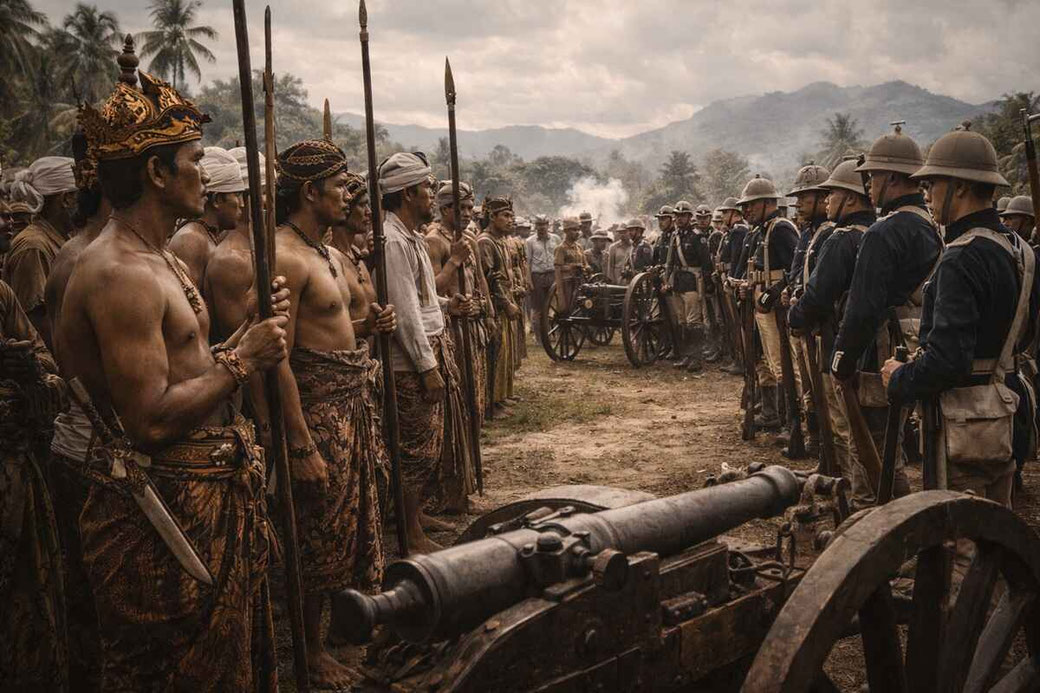
In the 19th century, the Netherlands shifted from trade to territorial control across the Indonesian archipelago. While Java and Sumatra were already under Dutch rule, Bali remained independent, governed by proud local kingdoms with deep spiritual traditions and strong warrior cultures.
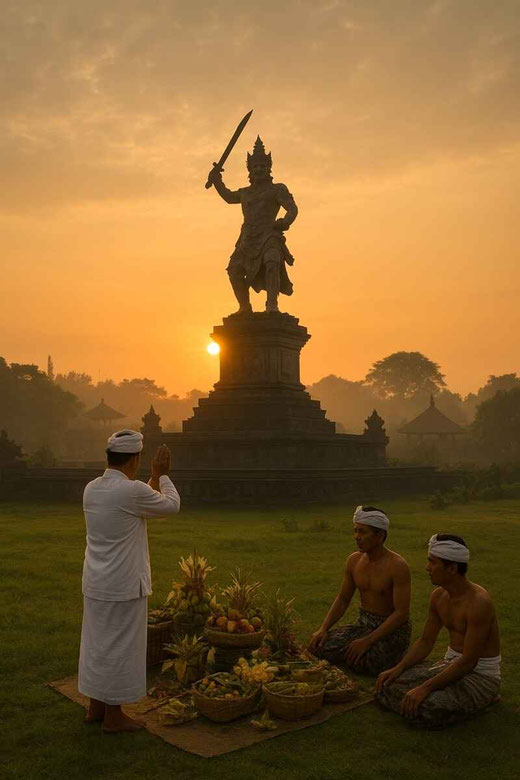
The Beginning of Conflict
The Dutch justified their expansion with the concept of “pacification”, claiming to bring order and civilization. In reality, the goal was political dominance and control of maritime trade routes.
In 1846, the first Dutch expedition landed in North Bali, attacking Buleleng after disputes over shipwrecks and “salvage rights.” Although the Dutch forces captured the royal palace in Singaraja, resistance continued. Two more invasions followed in 1848 and 1849, targeting Buleleng and Karangasem.
The war reached its climax in Klungkung in 1849, where Balinese warriors chose honourable death over surrender — the first of several tragic Puputan (mass ritual suicides) that would mark Balinese resistance for decades.
The Puputan Spirit
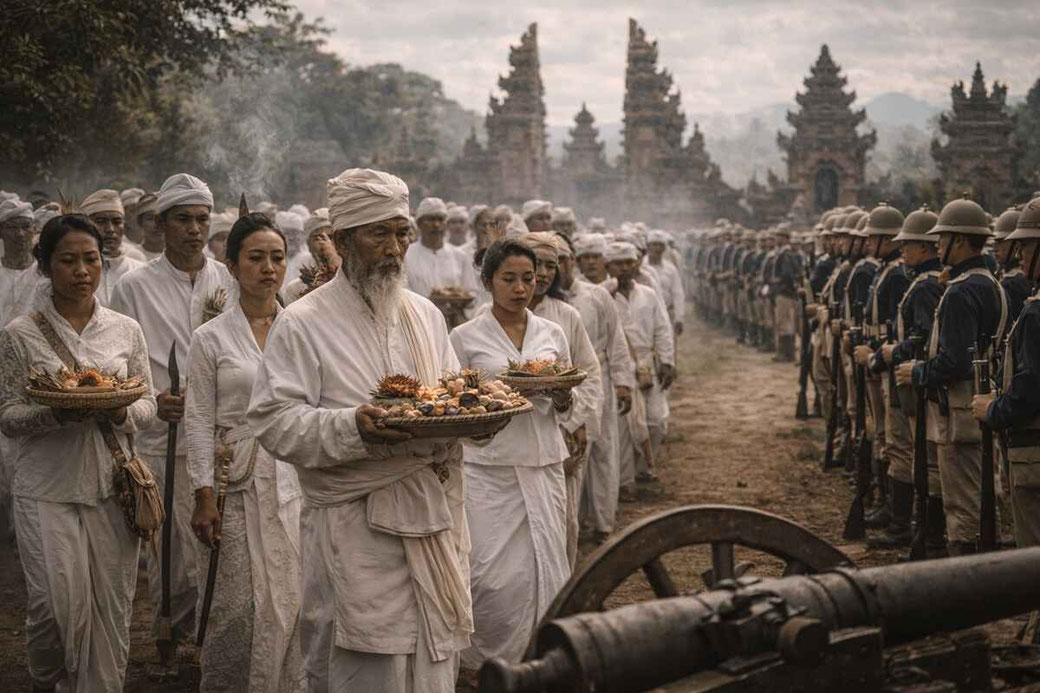
The term Puputan means “ending” or “finishing” in Balinese. It represents an act of collective defiance — entire royal families, priests, and soldiers marching into battle dressed in white, accepting death as a path to dignity.
The most famous Puputan occurred in Badung (Denpasar) in 1906 and Klungkung in 1908. Thousands died facing modern Dutch artillery with only traditional weapons, chanting prayers as they advanced. These events deeply shocked Western observers and became symbols of Balinese bravery and cultural pride.
After the Conquest
By 1908, the Dutch had full control over Bali. They installed indirect rule, allowing local rajas to govern under supervision. Ironically, this period also sparked growing Western fascination with Balinese art, dance, and religion — leading to the romanticized image of Bali as a “paradise” that would flourish in the early 20th century.
Despite the conquest, the Puputan spirit endures — a reminder of Bali’s unbroken identity and courage in the face of domination.
Although this information has been compiled with care, it may still be incomplete. If you have additions or comments, please feel free to share them in the comments below so other readers can benefit as well.