
The Formation of Bali
A Volcanic Birth
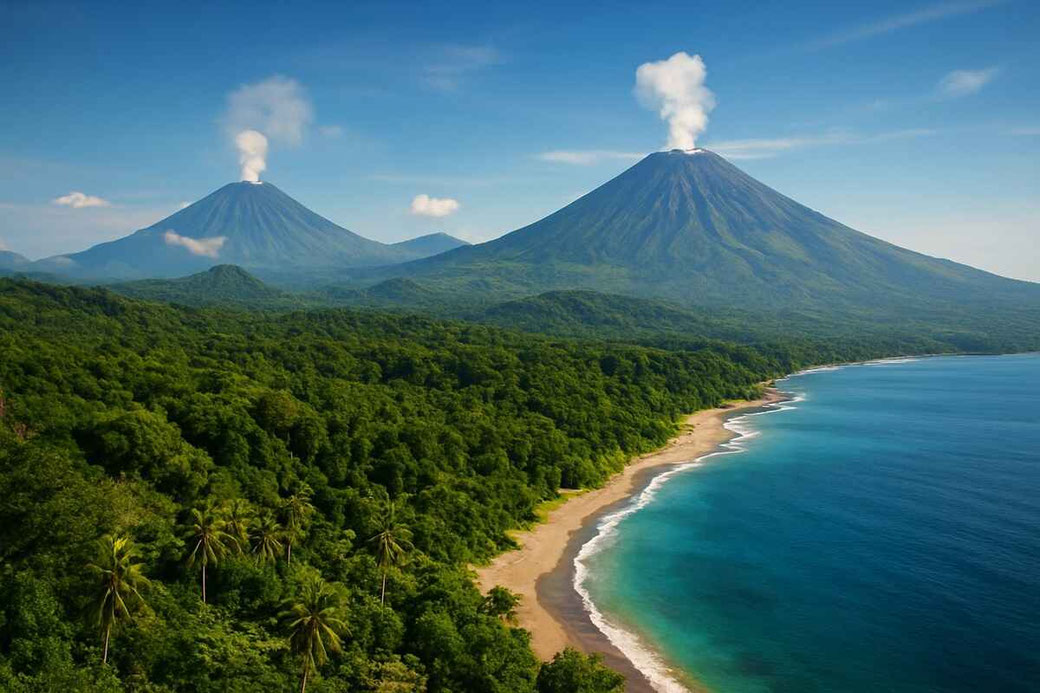
Long before Bali became the tropical paradise known for its rice terraces, temples, and warm smiles, it was nothing more than a fragment of the Earth’s crust caught in a slow but powerful geological dance. The island’s creation is written in layers of lava, ash, and coral — the lasting evidence of a fiery birth millions of years ago.
The Ring of Fire and the Birth of the Archipelago
Bali sits within the Pacific Ring of Fire, a 40 000-kilometre chain of volcanoes and fault lines surrounding the Pacific Ocean. This ring is home to 75 percent of the world’s active volcanoes and is responsible for much of Southeast Asia’s dramatic topography.
About 23 million years ago, shifting tectonic plates — the Indo-Australian Plate and the Eurasian Plate — collided. As the heavier oceanic crust slid beneath the lighter continental crust, magma rose through the gaps, forming a string of volcanic islands. Over countless eruptions and earthquakes, the Indonesian archipelago began to take shape. Bali was born from this intense activity, standing today between Java to the west and Lombok to the east.
A Landscape Forged by Fire
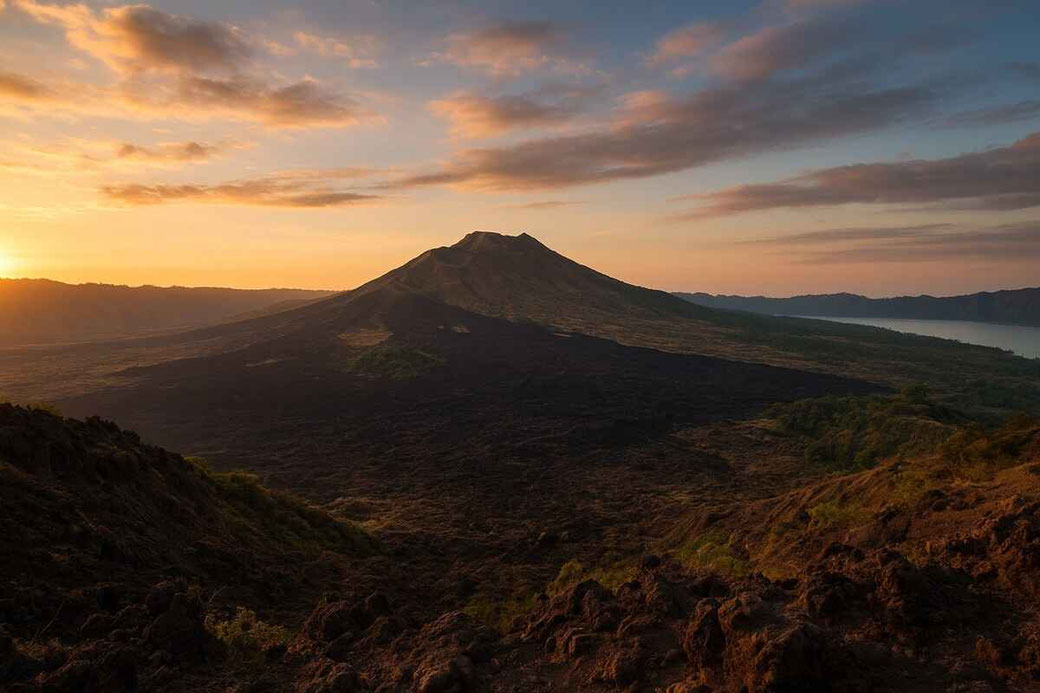
The island’s backbone is a range of volcanoes running from west to east. Among them, Mount Agung, rising to 3 142 meters, dominates the landscape and spiritual life of the Balinese. To its northwest lies Mount Batur, whose vast caldera shelters one of the most scenic lakes in Indonesia.
Every eruption — Agung’s in 1963 and Batur’s in 1926, for example — reshaped the terrain, enriching it with fertile volcanic soil. This is why Bali’s rice terraces, especially in Tegallalang and Jatiluwih, are so lush. The volcanic minerals create perfect conditions for agriculture and have sustained Balinese civilization for centuries.
The Ocean’s Role: Coral and Coastal Growth
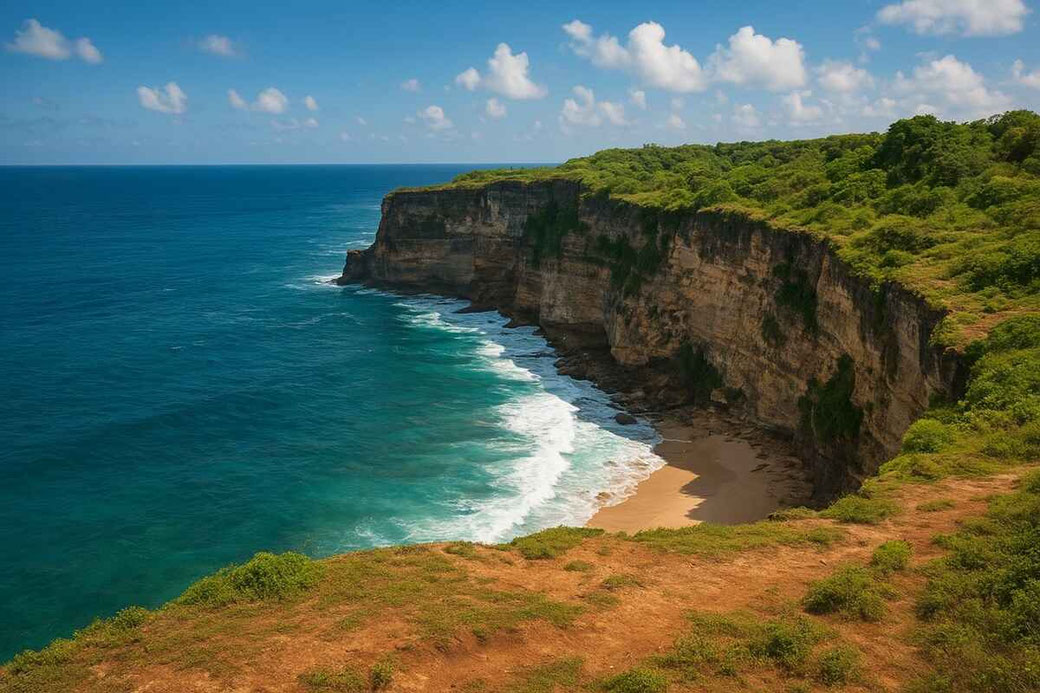
While volcanoes built the mountains, the sea sculpted the coastlines. Coral reefs began forming around the island’s submerged slopes roughly 10 000 years ago, after the last Ice Age when sea levels stabilized. Over time, the coral’s calcium skeletons accumulated, forming limestone cliffs such as those in Uluwatu and Nusa Penida.
Thus, Bali’s dual nature emerged — fiery mountains in the north and serene coral coasts in the south. It is a geological marriage of fire and water.
Earthquakes and Renewal
Because of its tectonic location, Bali still experiences mild earthquakes. Yet these movements are part of a larger cycle of renewal. Eruptions destroy, but they also rebuild. Villages near Mount Agung, for instance, have been repeatedly covered by ash and then reborn on the same land. For the Balinese, this rhythm of destruction and rebirth aligns perfectly with their Hindu philosophy of Tri Hita Karana — the harmony between humans, nature, and the divine.
Sacred Mountains
Volcanoes in Bali are not merely geological features; they are sacred beings. Mount Agung is believed to be a replica of Mount Meru, the cosmic mountain of Hindu mythology. The Mother Temple of Besakih sits on its slopes, symbolizing the island’s spiritual axis. Many ceremonies are held to honor the mountains, asking them for balance and protection.

Rivers, Lakes, and Fertile Valleys
Lava flows have carved natural drainage patterns, giving rise to Bali’s rivers and lakes. Lake Batur fills the crater of an ancient eruption, while Lake Buyan and Lake Bratan rest high in the mountains of Bedugul. These lakes serve as water reservoirs that feed the subak system — Bali’s traditional irrigation network recognized by UNESCO. The combination of volcanic topography and human ingenuity created one of the most efficient rice-growing systems in Asia.
Climate and Biodiversity
The island’s altitude variations create microclimates — humid and lush in the central highlands, dry and hot along the coasts. This range supports exceptional biodiversity: tropical rainforests in the west, fertile valleys in the center, and coral ecosystems in the south. Many of Bali’s native plants and animals owe their existence to the ecological diversity produced by its volcanic origin.
Geological Evolution Continues
Geologists estimate that Bali’s volcanoes are still active and that the island continues to rise slowly each century. New land is being formed in the eastern regions, while erosion reshapes cliffs elsewhere. Bali is therefore a living island, constantly transforming, never fixed. Its beauty lies in this eternal process of creation.
From Geology to Myth
For the Balinese, science and spirituality coexist naturally. Geological events are interpreted through mythic narratives — gods expressing their will through fire, ash, and rain. The island’s creation story mirrors its Hindu cosmology, where destruction (Siwa) is necessary for rebirth (Brahma). In this sense, the land itself is sacred scripture written in stone.
Although this information has been compiled with care, it may still be incomplete. If you have additions or comments, please feel free to share them in the comments below so other readers can benefit as well.