
The VOC Era
The Dutch Presence in Bali

When the Dutch East India Company (VOC) was founded in 1602, its goal was simple: dominate the spice trade in the East Indies. For the Dutch, islands like Java, Sumatra, and the Moluccas were key to wealth and power. Bali, however, was a different story — rich in culture, but poor in spices. As a result, it remained on the sidelines for much of the early colonial period.
Early Contacts and Trade
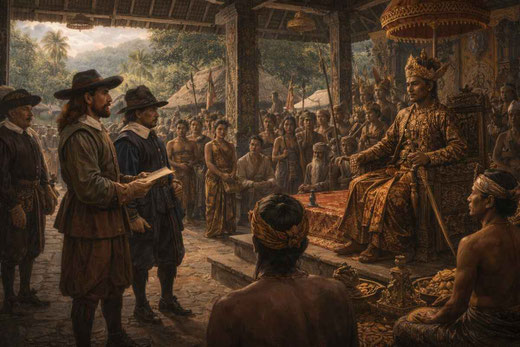
The first Dutch ships reached Bali around 1597, led by Cornelis de Houtman. His crew was warmly received by the Balinese king in the port of Gelgel.
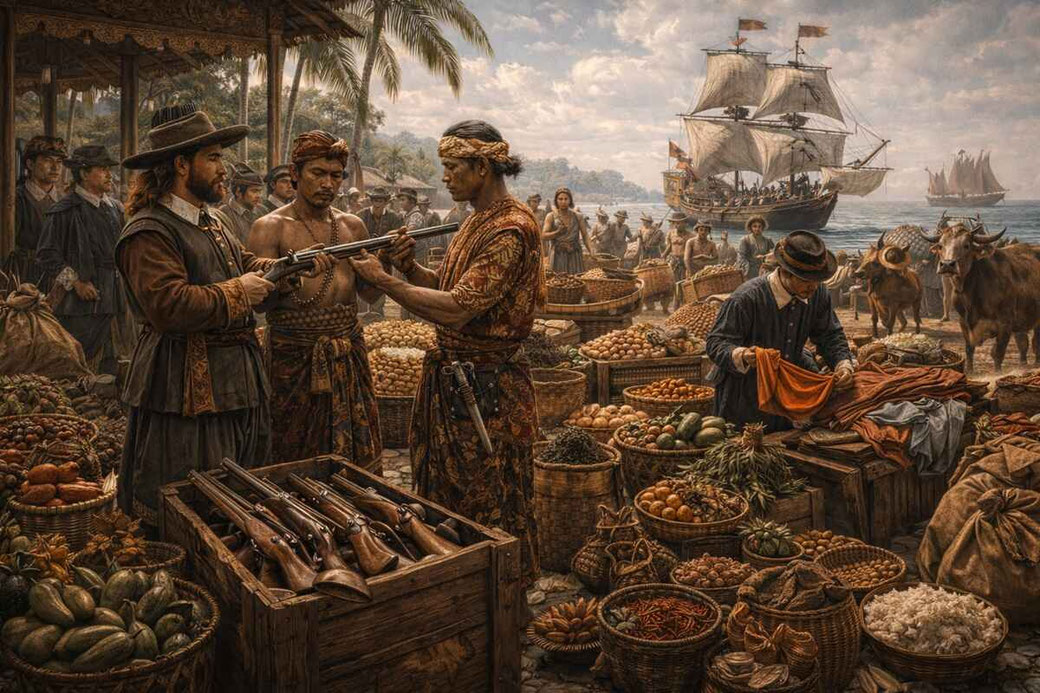
They were impressed by the island’s beauty and social order but found little of commercial interest. Still, trade developed slowly — mainly in rice, cattle, slaves, and opium.
Throughout the 17th and 18th centuries, Dutch traders and Balinese kingdoms maintained mutual relationships. The Dutch sought supplies for their ships, while Balinese rulers enjoyed firearms and prestige goods in return.
Yet Bali remained independent, divided into several small kingdoms often at war with one another.
Indirect Influence
Unlike Java, where the VOC ruled directly, Bali’s complex political landscape prevented Dutch control. Instead, the VOC used diplomatic alliances and economic pressure to influence local politics. Rivalries between kingdoms — such as Klungkung, Karangasem, Buleleng, and Badung — allowed the Dutch to play one against another.
By the late 18th century, VOC power was declining. The company was dissolved in 1799, and its possessions were taken over by the Dutch colonial government in Batavia (Jakarta). It was only then that the Dutch began to pursue direct control over Bali — a process that would culminate in the Puputan wars of the 19th century.
Cultural Encounters
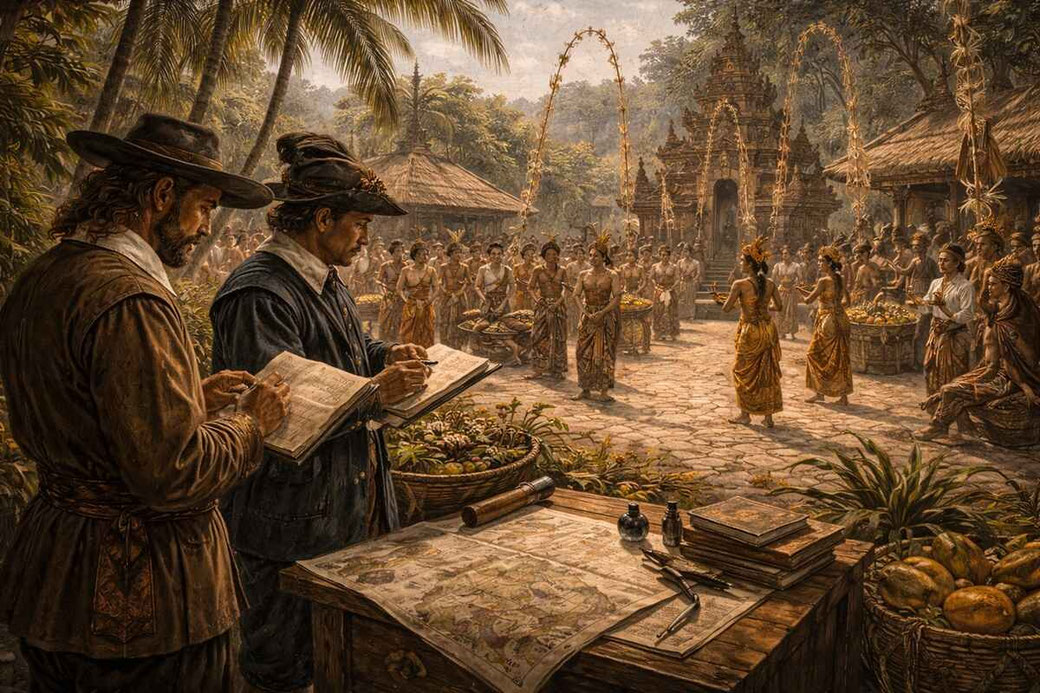
Despite limited political control, the Dutch presence brought lasting change. Western goods, weapons, and even artistic ideas began to appear. The Dutch also left detailed written records, giving historians valuable insights into Balinese society at that time. Yet Bali’s culture remained resilient and inward-looking, largely unaffected by European influence.
The VOC era thus marked the first meeting between Bali and the West — a cautious exchange that set the stage for later conquest, but also for deeper mutual fascination.
Although this information has been compiled with care, it may still be incomplete. If you have additions or comments, please feel free to share them in the comments below so other readers can benefit as well.